Experiment
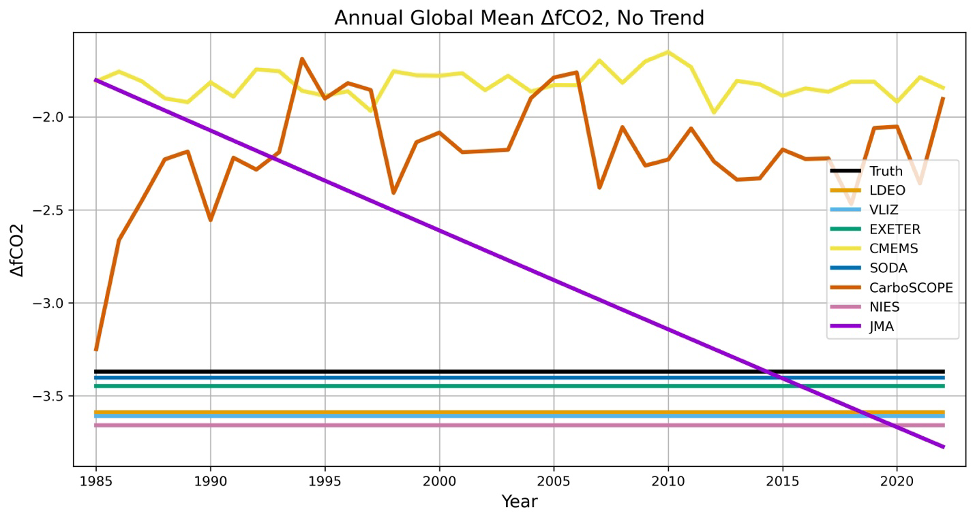
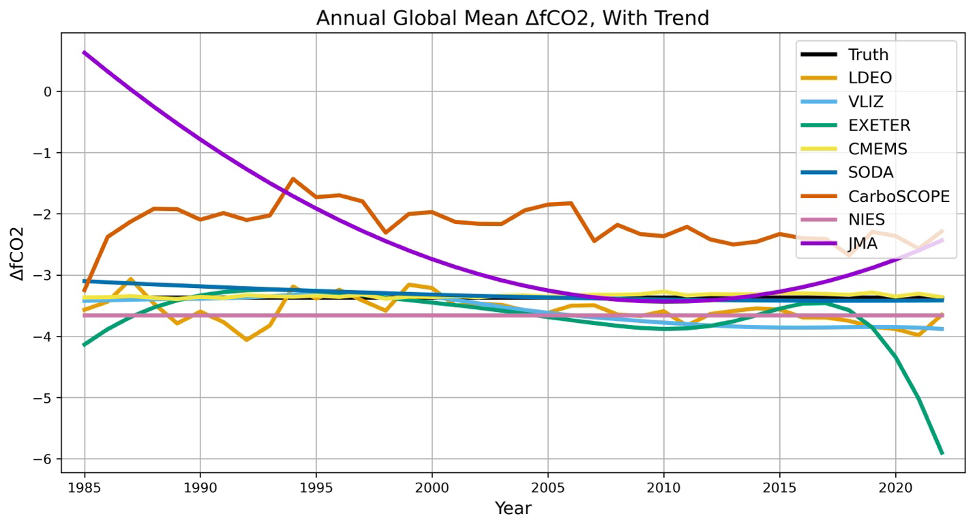
Climatological testbed
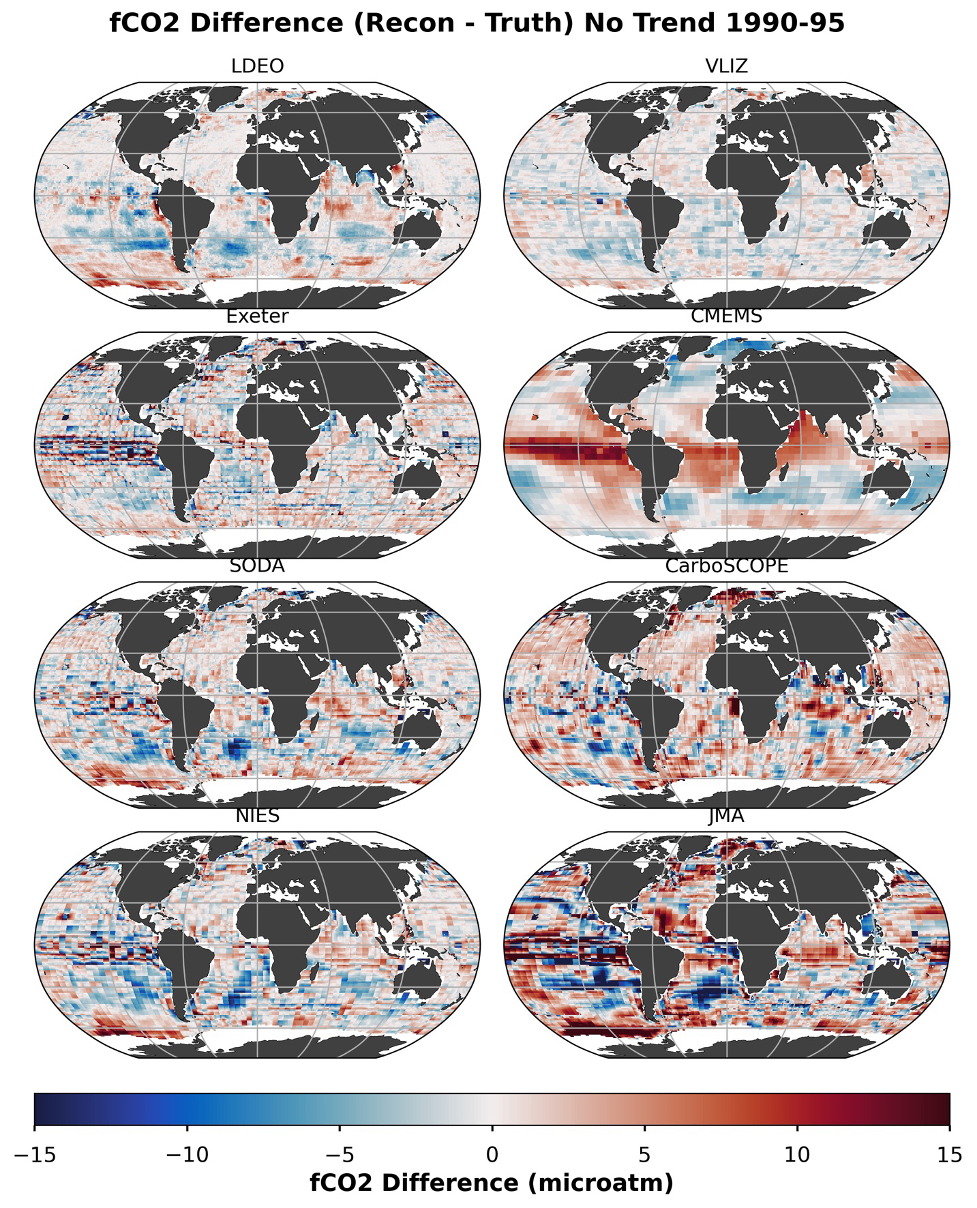
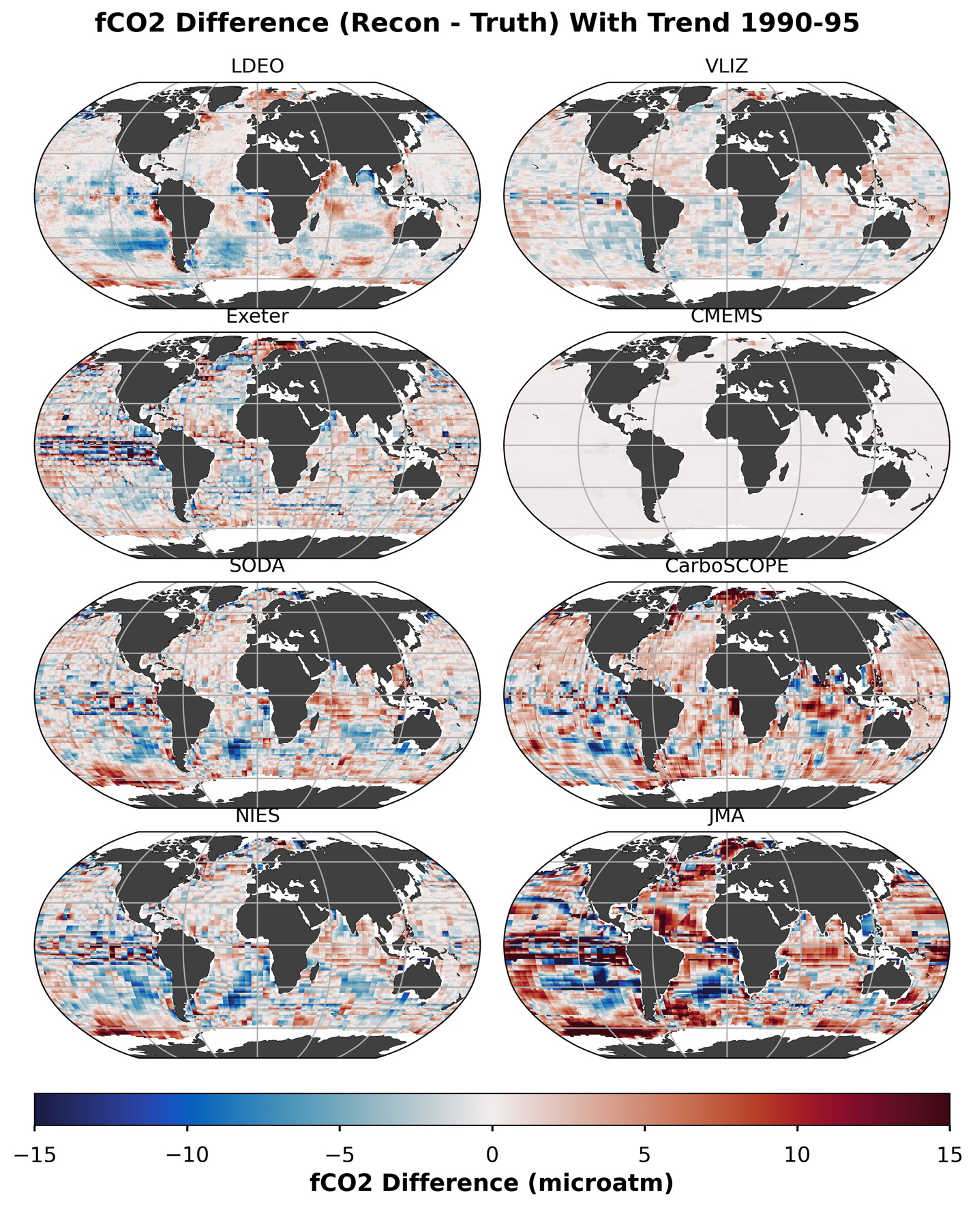
Spatial bias analysis
EXP 04: Climatological Testbed
Tests whether the early-2000s ocean carbon sink hiatus can be explained by sampling alone.
Overview
Many flux data products show a hiatus in the ocean carbon sink in the early 2000s. This experiment tests whether that signal could be an artefact of sparse sfCO₂ observations. It uses a synthetic sfCO₂ field without interannual variability, so any interannual variability in the sfCO₂ reconstructions can only come from the sampling.
Lead Author
Manuscript
In preparation
Experiment Information
| Status: | In preparation |
| DOI: | To be added |
| Testbed: |
Synthetic sfCO₂ field based on the Takahashi climatology (Takahashi et al., 2009):
|
| sfCO₂ reconstruction methods: |
8 sfCO₂ reconstruction methods:
|
| SOCAT mask used: | SOCATv2023 |
| Design: | EXP 04 evaluates the skill of sfCO₂ reconstruction methods in a simple testbed and assesses the impact of sparse sfCO₂ observations. Specifically, the motivation is to answer the question: is the early-2000s hiatus in the ocean carbon sink, shown by many flux data products, attributable to sampling alone, or is it a true shift in carbon uptake?
In this experiment, the true sfCO₂ field has no interannual variability and no internal physical or biogeochemical dynamics. The sfCO₂ reconstructions therefore only aim to identify the prescribed seasonal cycle and long-term mean sfCO₂, given the available sampling density. Two sub-experiments are conducted: a ‘no-trend’ experiment, in which the climatology is identical each year, and, to more closely replicate real-world conditions, a ‘with-trend’ experiment, which adds a trend of 2 µatm yr⁻¹ to both the Takahashi sfCO₂ climatology and the atmospheric xCO₂ field. All other predictor variables contain no trend. |
Climatological testbed
-
Mean-state reconstruction skill