EXP 05: Vertical Temperature Gradients
Quantifies how near-surface temperature gradients affect FCO₂ and the ocean carbon sink.
Overview
Previous studies have identified that the ocean carbon sink estimated from bulk air and seawater CO₂ may be underestimated due to overlooking naturally occurring vertical temperature gradients that are known to exist in the water close to the ocean’s surface.
These natural gradients include (1) the cool skin effect, where the very surface (≈10 μm) is cooler than the underlying water, and (2) diurnal warm layers, where under conditions of high insolation and low wind speed the top few metres of the ocean are heated relative to the waters further below.
Ford et al. (2026) showed that a third, artificial gradient is also present due to a warm bias in the sfCO₂ observations in SOCAT.
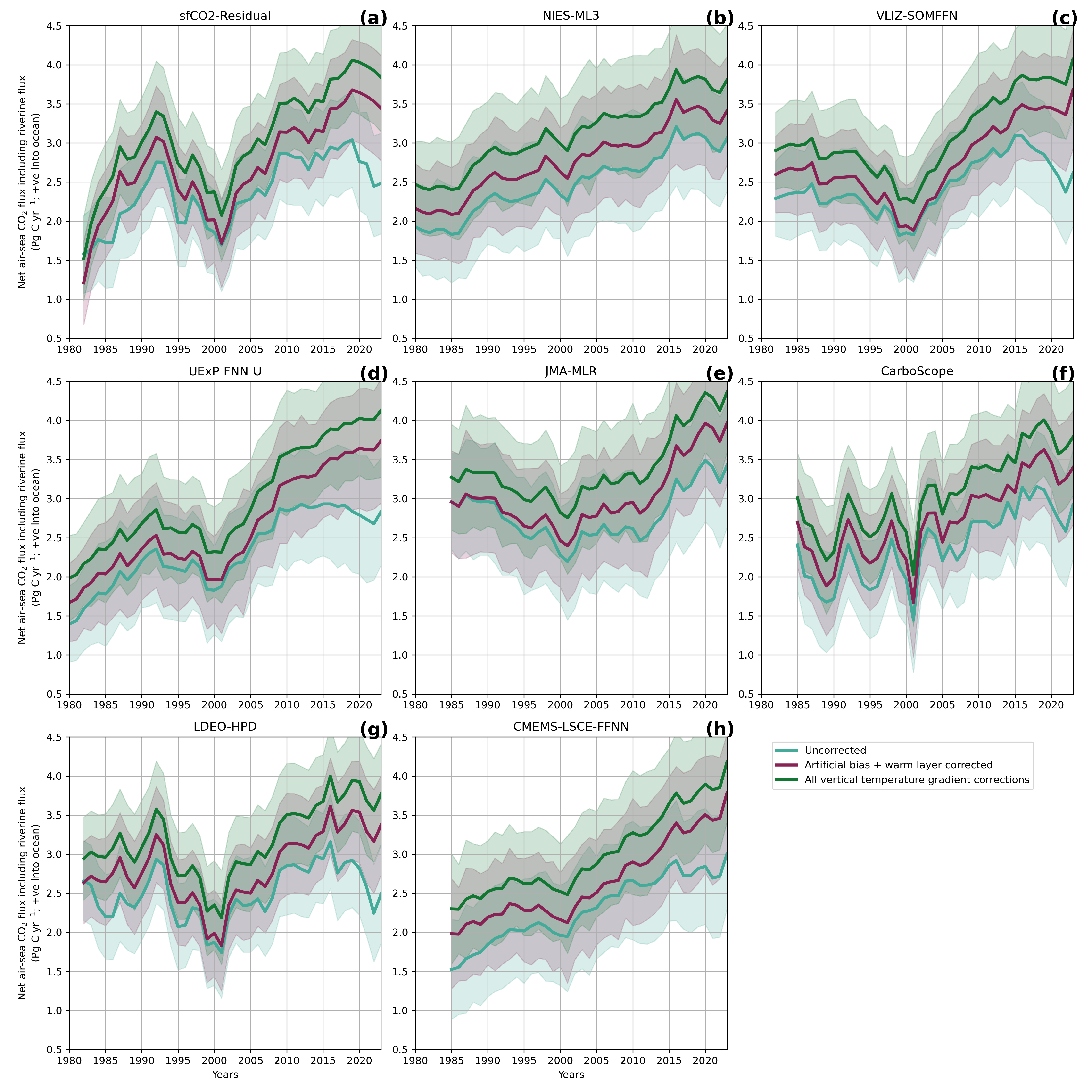
This experiment investigates the impact of these natural and artificial temperature gradients on FCO₂ and the ocean carbon sink estimated from the sfCO₂ reconstructions.
Lead Author
Manuscript
Daniel J. Ford, Amanda Fay, Thea Heimdal Hatlen et al. Impact of near-surface temperature gradients on the ensemble of sfCO₂ products within the SOCOMv2 initiative (in preparation).
Experiment Information
| Status: | In preparation |
| DOI: | To be added |
| Testbed: | None (sfCO₂ observations) |
| sfCO₂ reconstruction methods: |
8 sfCO₂ reconstruction methods:
|
| SOCAT mask used: | Recalculated SOCATv2024 |
| Design: | EXP 05 investigates the impact of vertical temperature gradients on the sfCO₂ reconstructions. Each group provided two runs of its sfCO₂ reconstruction method: the first uses the sfCO₂ observations from SOCAT as provided, and the second uses the recalculated sfCO₂ observations, corrected for warm layers and an artificial warm bias. FCO₂ is calculated in a consistent framework for all sfCO₂ reconstruction methods. All sfCO₂ reconstruction methods use the same SST and SSS datasets, and a modified version of the sfCO₂ observations from which 5% of the observations are removed as an independent test dataset. This is an experiment-wide methodological change compared with GCB 2024. |
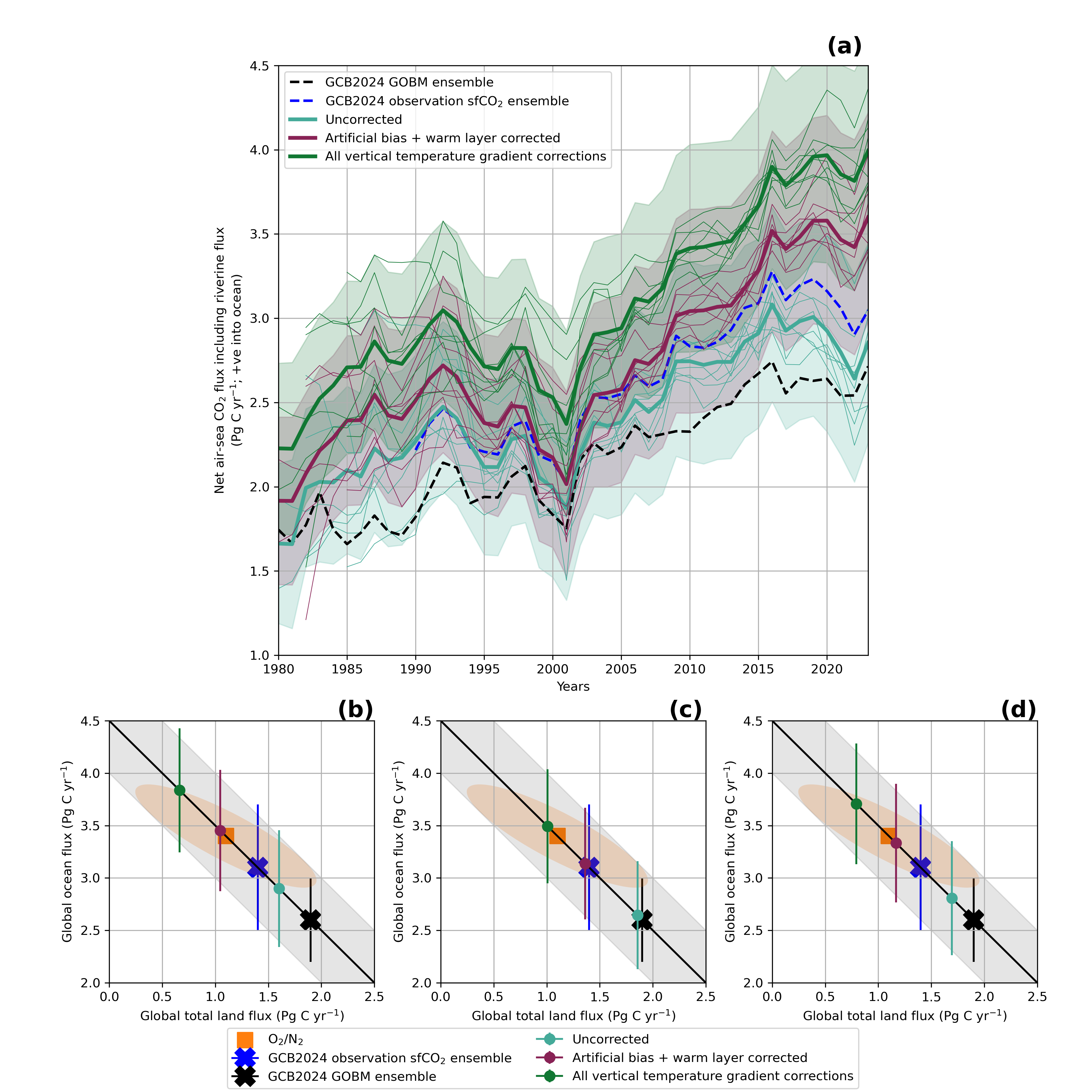
Impact of vertical temperature gradients on the ocean carbon sink across all sfCO₂ reconstructions, compared with independent estimates of the ocean carbon sink